
VOL.9
Predictive Building Automation: Using Digital Twins to Extend Energy Management Beyond Real-Time Control
Traditional Building Management Systems (BMS) are intrinsically reactive: they monitor current conditions and adjust controls based on predetermined schedules or threshold triggers. While reactive control maintains baseline stability, it often fails to prevent energy spikes or optimize performance before inefficiency occurs.
To move beyond traditional monitoring, modern facility operators are exploring how Digital Twin technology can work with advanced systems like Azbil’s savic-net™ G5.
By creating a dynamic, virtual representation of a physical facility, building operators can move from reactive maintenance toward predictive energy management, improving decision-making and supporting long-term sustainability goals.
What is a Digital Twin in Building Management?
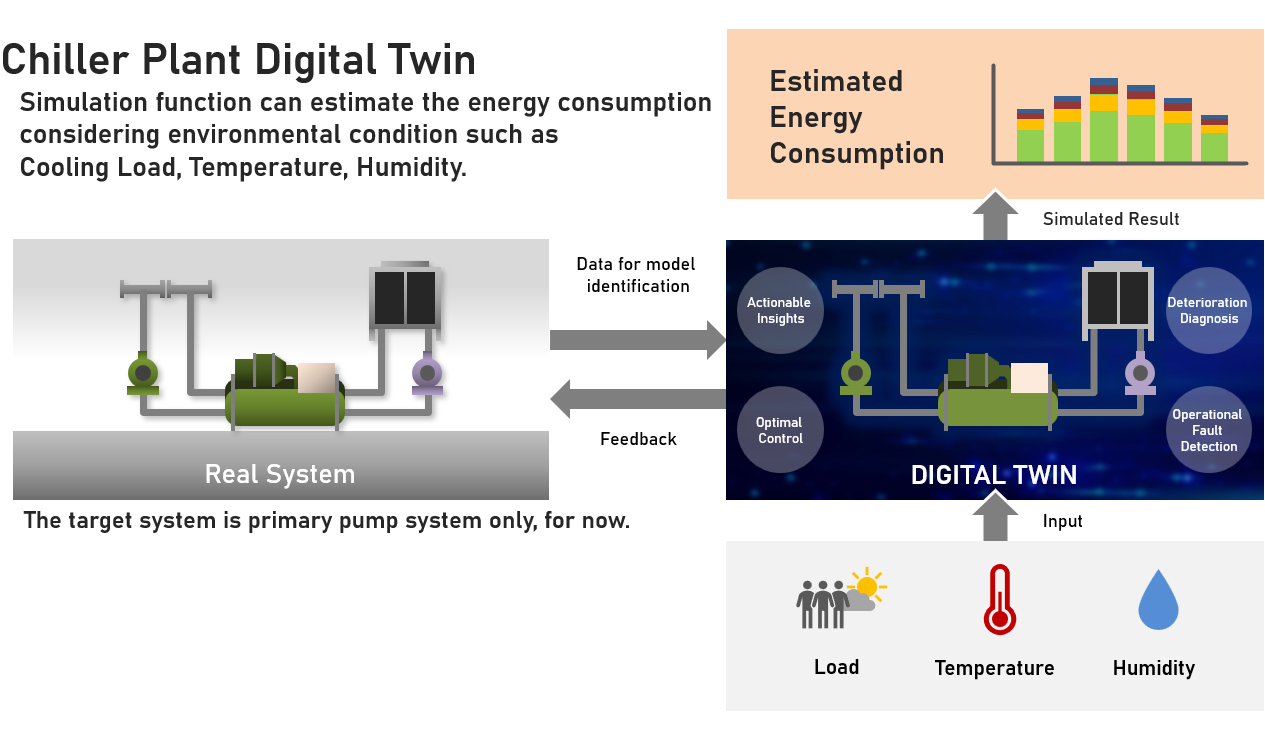
A Digital Twin is a data-driven virtual model of a building's physical assets, HVAC loops, and mechanical infrastructure. Unlike a static 3D BIM model, a functional BMS Digital Twin uses operational data from IoT sensors and power meters, and could incorporate weather information in the future, to support analysis, prediction, and scenario study, and future predictive applications evaluation.
This connected use of operational data allows the software to:
- Estimate thermal behaviours: Help understand factors that may affect forecast how temperature, humidity, and cooling demand, while preparing for future load prediction capabilities may change before operating conditions shift.
- Compare energy scenarios: Evaluate “what-if” control options in a virtual environment before applying them to actual operation.
- Monitor system degradation: Compare expected performance with actual outputs to identify possible efficiency loss earlier.
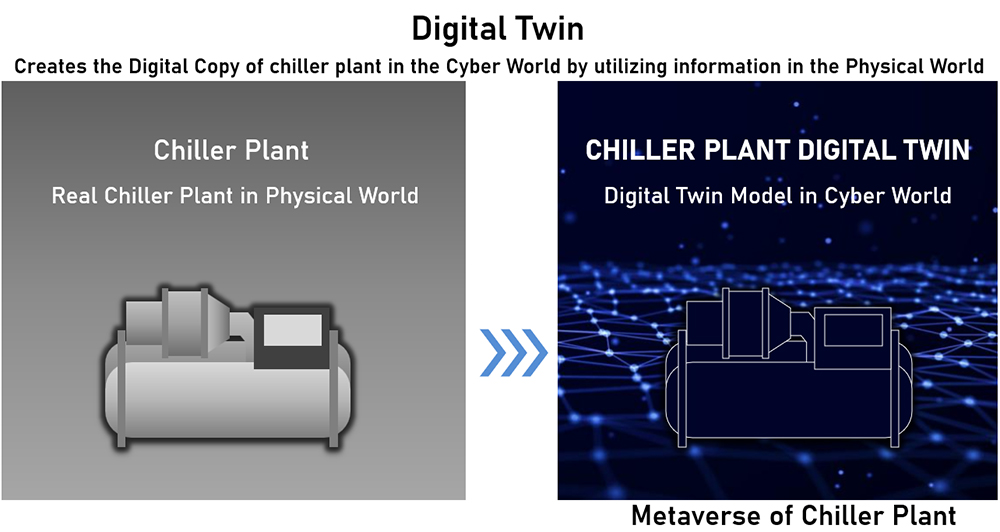
Key Benefits : Moving from Monitoring to Prediction
Reactive vs. Predictive Control at a Glance
◆ Traditional BMS (Reactive)
Monitor Current State ➔ Detect Deviation ➔ React & Adjust (Post-Event)
Result : Delayed cooling response & sudden energy spikes.
◆ Digital Twin BMS (Predictive)
Study Simulate Future Load Drivers ➔ Recommend an Effective Strategy ➔ Support Pre-Adjustment Planning (Pre-Event)
Result : Better-informed energy-saving actions and more stable thermal comfort.
1. Predictive Pre-Cooling and Load Shifting
In high-ambient environments, peak electrical demand charges can significantly increase monthly utility bills. As a future extension, a Digital Twin could incorporate can analyse weather forecasts, historic thermal retention, and scheduled occupancy to support studies on support pre-cooling strategy planning. By lowering temperatures slightly during off-peak hours, facility teams may reduce reliance on heavy chiller loads during peak tariff windows, depending on building conditions, model maturity, and operational constraints.
2. Virtual Commissioning and Strategy Testing
Implementing new energy-saving sequences directly on live physical systems carries operational risks. With Digital Twin simulation embedded within an Energy Management System (EMS), facility teams can review sequence changes—such as dynamic chilled water temperature resets or variable flow rate modifications—in a controlled virtual environment before applying them to live systems.
3. More Context-Aware Chiller Plant Management
A standalone Chiller Plant Management System manages equipment efficiency, but a Digital Twin can provide broader contextual intelligence. In future development, it can help align chiller staging not only with immediate cooling demand, but also with expected operating conditions forecasted, available operational data, and factors that influence cooling demand conditions hours in advance.
How savic-net™ G5 Can Support a Data-Driven Future
Azbil’s savic-net™ G5 can provide a strong data foundation for future Digital Twin integration:
| System Capability | Digital Twin Integration & Benefit |
|---|---|
| High-Speed Data Architecture | Collects and processes high-granularity operational telemetry that can support more detailed modelling, analysis, and performance evaluation. |
| Open Protocol Native (BACnet®) | Helps reduce data silos by connecting multi-vendor equipment, sub-meters, and environmental sensors into a more unified operational view. |
| Advanced Data Visualizations | Helps present simulation and analysis results as clearer operational insights for facility engineers. |
Conclusion
As commercial real estate and industrial facilities face stricter carbon compliance targets, simply observing building performance is becoming less sufficient. Integrating Digital Twins into a Building Management System can turn raw data into more predictive insight—helping facilities identify energy-saving opportunities before inefficiencies grow.
Frequently Asked Questions (FAQ)
Q1: What is the difference between a 3D BIM model and a Digital Twin?
ANS: A standard 3D BIM model is like a 3D drawing that shows the layout of a building. A Digital Twin is a digital model connected to operational data. In future development, it could also can use weather forecasts, building schedules, and room usage data to understand likely operating conditions estimate future conditions and compare energy-saving options.
Q2: Do we need to replace our current HVAC equipment to use a Digital Twin?
ANS: In many cases, existing hardware does not need to be replaced. Systems like Azbil’s savic-net™ G5 can use open standards like BACnet®, which may allow Digital Twin software to connect with existing chillers, air handlers, and power meters after confirming site conditions and communication requirements.
Q3: How much energy can a facility save with predictive control?
ANS: Energy savings depend on building size, age, operating patterns, equipment condition, and control limitations. Predictive pre-cooling may help reduce peak power demand and HVAC energy use, but the expected impact should be estimated through site-specific analysis or pilot validation.
Q4: Will pre-cooling make rooms uncomfortable for people inside?
ANS: Not necessarily. For future pre-estimates cooling applications, the system could use based on available data to discuss possible cooling settings ahead of time. The intent would be to cool. Can cool the building gently during off-peak hours when electricity is cheaper, while maintaining helping maintain comfortable temperatures and reducing heavy equipment use during expensive peak hours.
Ready to move from reactive monitoring toward data-informed efficiency improvement?
Contact Azbil (Thailand) Co., Ltd. today to explore how savic-net™ G5 and Digital Twin technology can help improve operational performance.
For all enquiries, please feel free to contact us
Click Here